
Fall does not look the same in every US region. Some families see bright leaves; others notice a small temperature change or a different school rhythm. Use the season you actually have rather than trying to reproduce a particular photograph.
Each activity below includes materials, setup and a younger-or-older variation. Use those details to choose one suitable idea rather than trying to complete the whole collection. Existing supplies and familiar places are enough to get started.
Make fall activities fit your real week
Choose one outdoor observation for comfortable weather and one indoor fallback. Keep fall crafts small: a paper leaf character or a color strip can be complete without a trip to a craft store. If the family calendar is already crowded, repeat a familiar walk rather than adding another seasonal event.
10 activities to choose from
Time and age labels are planning suggestions. Use the adaptations and provide the adult help your child needs.
1. The fall color strip
What you need: Paper and crayons. Cost: Use what you have.
Draw five small boxes and fill them with colors you notice on a short fall walk or through a window. Label the date rather than expecting every region to have the same foliage schedule. Compare another day if interested. Keep leaves on plants and observe from safe public spaces.
Make it fit: Younger kids can choose two colors. Older kids can compare shaded and sunny trees.
Adult help: Adult nearby; adult supervises outdoor activities.
2. Leaf characters on paper
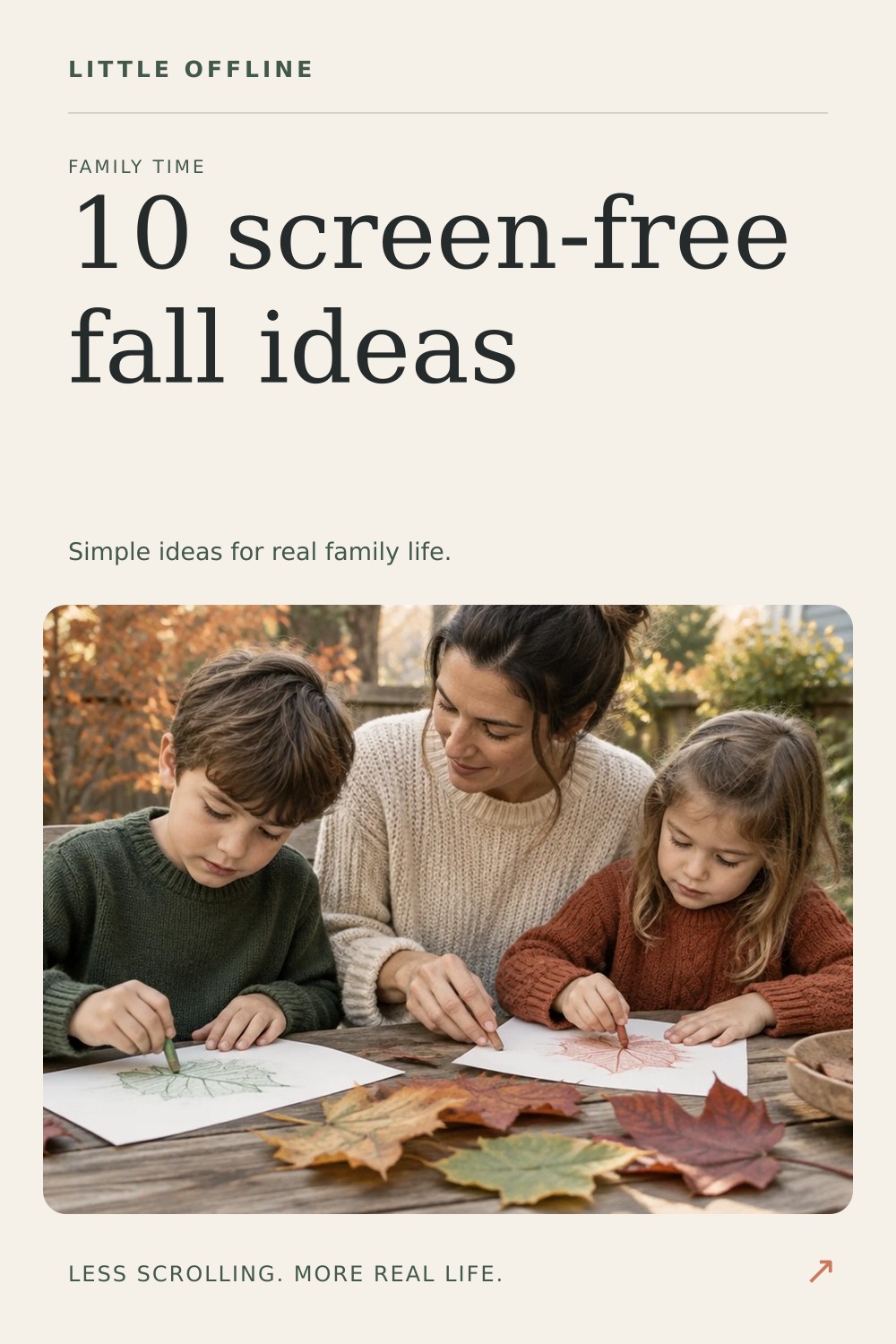
What you need: Fallen leaves where allowed, paper and crayons. Cost: Use what you have.
Place a permitted fallen leaf on paper and imagine what character its shape suggests. Draw around it without needing to glue it down. Leave unknown plants alone and wash hands after handling outdoor materials. A drawn leaf works if collecting is restricted or the weather is wet.
Make it fit: Younger kids can add a face. Older kids can create a short character story.
Adult help: Adult nearby; adult supervises outdoor activities.

3. The pumpkin design studio
What you need: Paper and crayons. Cost: Use what you have.
Draw several pumpkins with different expressions or patterns. Choose one design to display as paper art. No carving is needed, and adults handle any separate real-pumpkin cutting activity. Let the designs be funny, geometric or gentle rather than assuming every child enjoys scary themes.
Make it fit: Younger kids can draw broad stripes. Older kids can design a repeating pattern.
Adult help: Adult nearby; adult supervises outdoor activities.
4. The cozy book basket
What you need: Three books and a small open basket. Cost: Use what you have.
Choose books that match your family’s version of fall: changing weather, harvest, school routines or simply cozy stories. Put the basket near a comfortable seat and read one selection. Avoid buying a themed collection just to fill the basket. Rotate only when the current choices stop being interesting.
Make it fit: Younger kids can choose covers. Older kids can add a recommendation card.
Adult help: Adult nearby; adult supervises outdoor activities.
5. The rainy-window sketch
What you need: Paper and crayons. Cost: Use what you have.
Look at rain from a safe indoor window and draw the shapes it makes on glass or pavement. Keep the window closed and do not lean out. Add a fictional character who has a sensible plan for the weather. The drawing can become a short story while you wait for conditions to improve.
Make it fit: Younger kids can make raindrop marks. Older kids can compare near and far details.
Adult help: Adult nearby; adult supervises outdoor activities.

6. Make a harvest pretend market
What you need: Safe large play food or paper drawings. Cost: Use what you have.
Set up a small pretend market using foods familiar in your region. Make signs and choose what a customer might buy for soup or a picnic. Keep any real food preparation separate and adult-guided. A paper market is enough to explore the idea without a shopping trip or decorative supplies.
Make it fit: Younger kids can sort two foods. Older kids can add simple prices.
Adult help: Adult nearby; adult supervises outdoor activities.
7. The sweater-weather outfit game
What you need: Two suitable clothing choices. Cost: Use what you have.
Choose an outfit for an actual fall plan and explain one practical choice, such as a removable layer. An adult checks the weather and suitability. Lay the clothes ready for later rather than making a mess with the whole closet. The task ends with something the family can use.
Make it fit: Younger kids can choose a top. Older kids can prepare the full set.
Adult help: Adult nearby; adult supervises outdoor activities.

8. The short daylight walk
What you need: A safe familiar route. Cost: Use what you have.
Plan a small outdoor loop that fits the available daylight and weather. Notice one seasonal change and one thing that has stayed the same. Adults choose visibility, clothing and route safety. There is no need to fit in an elaborate nature lesson before dinner.
Make it fit: Younger kids can point to a change. Older kids can sketch it afterward.
Adult help: Adult nearby; adult supervises outdoor activities.
9. A thankful-things postcard
What you need: Paper and crayons. Cost: Use what you have.
Make a note about one concrete thing you appreciate, such as someone helping find a lost book. Keep participation voluntary and allow mixed feelings about the season or a difficult day. Deliver the note within the household or through an adult. A specific message is enough.
Make it fit: Younger kids can draw the moment. Older kids can explain why it mattered.
Adult help: Adult nearby; adult supervises outdoor activities.
10. The indoor fall picnic
What you need: An ordinary snack and a blanket. Cost: Use what you have.
Set a snack on a blanket indoors and choose a fall story to read together. Handle allergies, age-appropriate food preparation and hot drinks as usual. Use existing food and dishes so the activity stays easy. Fold the blanket together afterward and call the picnic complete.
Make it fit: Younger kids can place napkins. Older kids can choose a story and help reset.
Adult help: Adult nearby; adult supervises outdoor activities.
A simple seasonal rhythm
For a simple weekend, take a short noticing walk, read one book and make a small drawing afterward. If it rains, use the window as the view and keep the rest of the plan. The seasonal feeling comes from paying attention, not from filling every afternoon.
Choose your first activity
| What you have today | Choose | Keep the plan small |
|---|---|---|
| A few minutes | A color observation or quick drawing | One page or one thing to notice |
| A quiet indoor stretch | A book, paper project or pretend scene | A limited set of supplies |
| Comfortable outdoor conditions | A short adult-supervised observation | A familiar route and clear endpoint |
| Different ages together | A shared theme with separate roles | Let drawings, words and pointing all count |
Keep the supplies simple
Use the materials listed with each activity first. If something is missing, our activity supply collection explains what different items are useful for and what to check before buying.
Questions parents ask
Do we need special seasonal supplies?
No. Most ideas use paper, books, safe household materials or observation. Buy only when a specific activity you want to repeat genuinely needs something.
What if the weather or family schedule changes?
Use the indoor or smaller version and keep the original idea for another day. Completing a seasonal list is not the goal.
Save a little inspiration
Keep this idea for later.
Save the guide to your family activities board.
Save to Pinterest

