
A six-year-old may enjoy rules one day and want open-ended pretend play the next. You can offer both without buying separate kits. A sheet of paper can become a comic, a map, a pattern challenge or a game with rules the child helps invent.
The activities below avoid assuming that every child reads independently or wants school-like tasks after school. Show what the activity is for, help with the first step and leave room to adapt. A child can be the designer even when an adult does some of the writing.
Make the instructions visible without making them long
Show one example, then give the child a chance to start. For a comic, draw four empty boxes. For a map, mark the door and window. For a game, play one practice turn. A visible example can carry more meaning than several minutes of verbal explanation.
When rules are involved, agree on them before play and allow a revision between rounds. This keeps experimentation separate from changing a rule just because someone dislikes the current result. Cooperative versions can help when siblings have different skills.
12 activities to choose from
Time and age labels are planning suggestions. Use the adaptations and provide the adult help your child needs.
1. The one-box neighborhood
What you need: An empty cereal box, paper and crayons. Cost: Use what you have.
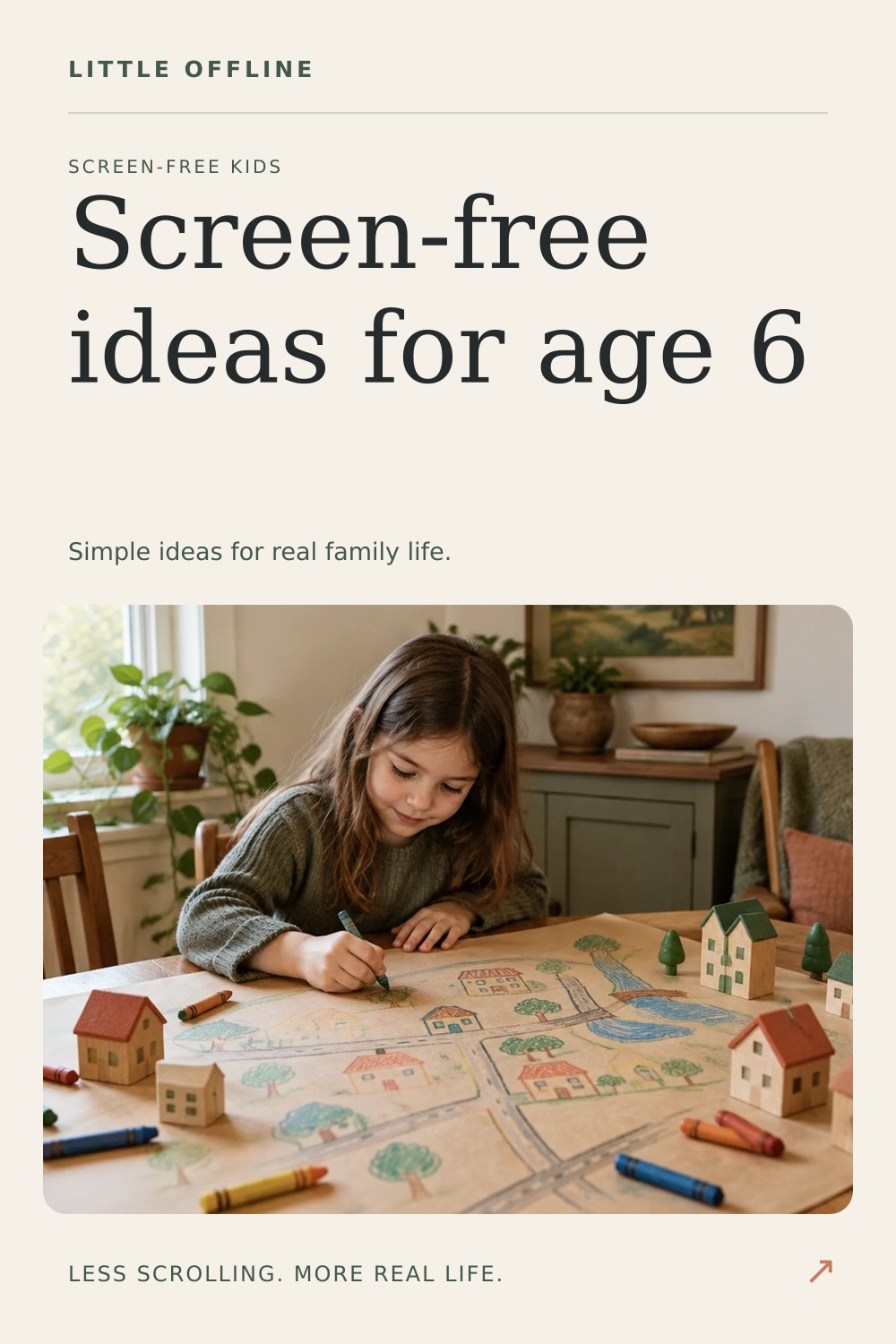
Open a clean box flat and draw a road across the inside. Add one place your family uses, such as a library, grocery store or bus stop. Your child decides what belongs next door and moves a finger along the route. Let the neighborhood change as the story changes; a convincing map is less useful than a place they want to return to.
Make it fit: Offer one building to a younger child. Older kids can add addresses, a legend and delivery routes.
Adult help: Adult nearby.
2. Design a tiny museum
What you need: Three safe household objects and paper. Cost: Use what you have.
Choose three objects that tell a story about a made-up explorer. Place them on a shelf or table and make a label for each. Invite one visitor to tour the exhibition and ask a question. Keep the collection deliberately small so there is time for storytelling rather than a full-room treasure hunt and a long reset afterward.
Make it fit: Draw labels for nonreaders. Older kids can write a curator’s introduction and an admission ticket.
Adult help: Adult nearby.
3. Make a comic in four boxes
What you need: Paper and pencil. Cost: Use what you have.
Fold paper into four panels. In the first, introduce a character who wants something; in the second, add a problem; in the third, try a solution; in the fourth, show what happens. Stick figures and speech bubbles are enough. If writing slows the fun, take dictation for your child while they draw the action.
Make it fit: Younger kids can narrate one panel. Older kids can make a wordless comic another person can understand.
Adult help: Adult nearby.

4. Make a family newspaper
What you need: One folded sheet, pencil and a family conversation. Cost: Use what you have.
Ask for one real piece of household news: a repaired bike, a new library book or a funny breakfast moment. Add a headline and a drawing. Include a pretend weather report only if it is clearly part of the game. Let your child read the finished page aloud, then save it or recycle it without making publication a daily obligation.
Make it fit: Younger kids can dictate a headline. Older kids can interview someone and separate news from opinion.
Adult help: Adult nearby.
5. The pattern parade
What you need: Large blocks or drawn shapes. Cost: Use what you have.
Arrange three large blocks in a repeating pattern and ask what might come next. Your child can follow your rule or invent another and explain it. If physical pieces cause frustration, draw the pattern instead. Keep small construction pieces away from younger siblings and children who mouth objects, even when an older child is doing the activity.
Make it fit: Begin with two alternating colors. Older kids can create a pattern with more than one changing feature.
Adult help: Adult nearby.
6. Design a pet for a planet
What you need: Paper and crayons. Cost: Use what you have.
Invent a planet with one unusual feature, such as permanent rain or very tall trees. Draw an animal that could feel at home there. Ask where it sleeps, what it carries and how it greets a friend. There is no need to make the design scientifically correct; make the imagined needs and choices clear enough for someone else to follow.
Make it fit: Younger kids can choose one feature. Older kids can label adaptations and sketch a habitat.
Adult help: Adult nearby.

7. Map the room from above
What you need: Paper and pencil. Cost: Use what you have.
Imagine floating safely above the room like a camera and draw where the door, window and largest furniture would appear. Choose one familiar route and trace it with a finger. The map does not need accurate scale. Keep this as a drawing exercise; no one needs to climb to see the room from above or move heavy furniture.
Make it fit: Younger kids can place a drawn bed and door. Older kids can add a key and estimate distances.
Adult help: Adult nearby.
8. Invent a board game
What you need: Paper, crayons and large counters appropriate for your child. Cost: Use what you have.
Draw a path with a beginning and an end. Add three special spaces, such as move ahead, swap places or tell a joke. Choose a simple way to move, like taking turns choosing one or two steps. Play once before decorating everything; a short trial helps you notice confusing rules while they are easy to change.
Make it fit: Use finger counters for younger kids. Older kids can add a cooperative win condition.
Adult help: Adult nearby.
9. The paper weaving window
What you need: Two sheets of paper and adult-precut broad strips. Cost: Use what you have.
Fold one sheet and let an adult make a few broad slots that stop before the edges. Slide a paper strip over and under the openings, then reverse the pattern for the next strip. Keep the first project small enough to finish in one sitting. Skip blades and use age-appropriate scissors only with the supervision your child needs.
Make it fit: Younger kids can push one broad strip through. Older kids can plan alternating colors.
Adult help: Adult nearby.

10. The one-page treasure map
What you need: Paper and pencil. Cost: Use what you have.
Draw a pretend island with three landmarks and a starting point. Give a character a route using directions such as past the tree and around the pond. Let your child choose what the treasure is and why someone hid it. Playing entirely on paper works when the room is small or you do not want a real hunt to scatter belongings.
Make it fit: Younger kids can follow a finger path. Older kids can add a key, compass directions and decoy routes.
Adult help: Adult nearby.
11. The paper robot instruction game
What you need: Paper and pencil. Cost: Use what you have.
One person draws a friendly robot while the other gives three simple instructions, such as make a square head, add two wheels and give it a pocket. Compare what each person imagined, then switch roles. Celebrate unexpected interpretations instead of grading the drawing. Keep directions short enough that the listener can ask for a repeat without feeling tested.
Make it fit: Younger kids can give one instruction at a time. Older kids can try precise positional words.
Adult help: Adult nearby.
12. Make a tiny book
What you need: One folded sheet of paper and crayons. Cost: Use what you have.
Fold a sheet into four panels and use each panel as a page. Put a title on the front, two moments inside and a final image on the back. The book can tell a story, show favorite things or explain an invented machine. An adult can write dictated words; a readable drawing-only book is equally complete.
Make it fit: Younger kids can fill two panels. Older kids can add a contents page in a larger version.
Adult help: Adult nearby.
When to simplify or extend the idea
A good extension adds a reason to revisit the work. Invite someone to use the map, read the comic or try the game. Ask what was easy to understand and what could change, without turning the activity into a performance review.
A quick choice for today
| The situation | A useful starting choice | Adult role |
|---|---|---|
| Low energy | A familiar book or drawing prompt | Stay available and keep the first step small |
| Wants company | A pretend story, interview or shared game | Join for a clearly defined round |
| Wants ownership | A map, comic or self-chosen project | Agree on safe tools and space |
| Needs a change of pace | A short comfortable movement game | Check the area and supervise as needed |
Keep the supplies simple
Use the materials listed with each activity first. If something is missing, our activity supply collection explains what different items are useful for and what to check before buying.
Questions parents ask
How long should a 6-year-old play without a screen?
These ideas do not prescribe a duration. Start with a manageable activity and adapt to the child, the day and the support available.
What if reading or writing is a barrier?
Use drawings, spoken instructions, dictated words or an adult writing beside the child. The activity can keep its purpose without requiring independent reading.
Save a little inspiration
Keep this idea for later.
Save the guide to your family activities board.
Save to Pinterest

